Rigging company · operated lifts · machinery moving
Moving a machine? You may not need a crane.
What size crane do you need? Start with pick weight and working radius. Most plant
moves don’t need a crane company — they need a rigging company. Our operated
pick-and-carry lifts work inside the plant, under low headroom, to 118,000 lb in a single
lift. Send the lift and operator to work your plan, or hand us the whole job turnkey.
Planning tool — not a lift plan. The assigned crane, stamped load chart, qualified crew,
verified site conditions, and project-specific plan govern every pick.
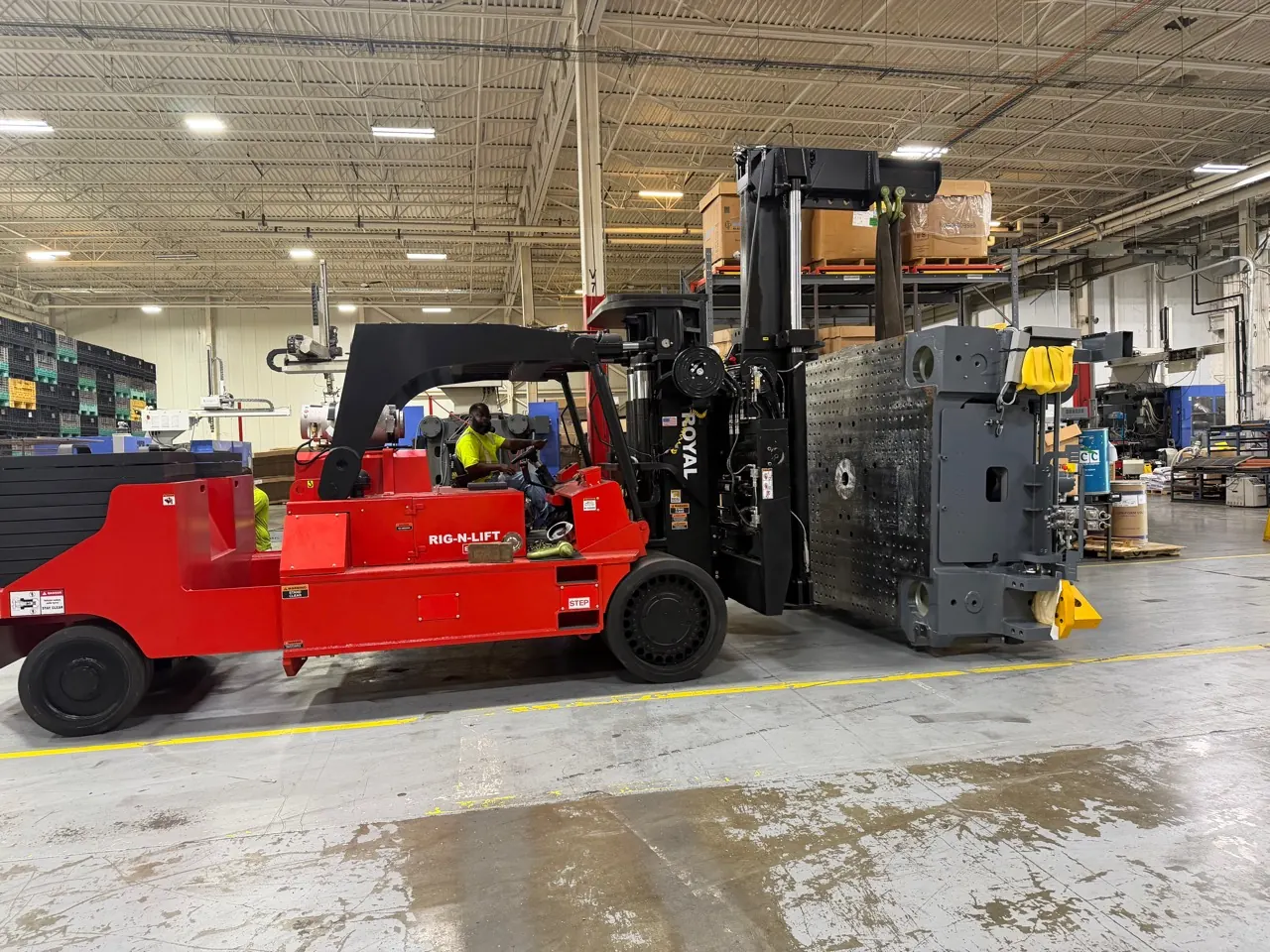
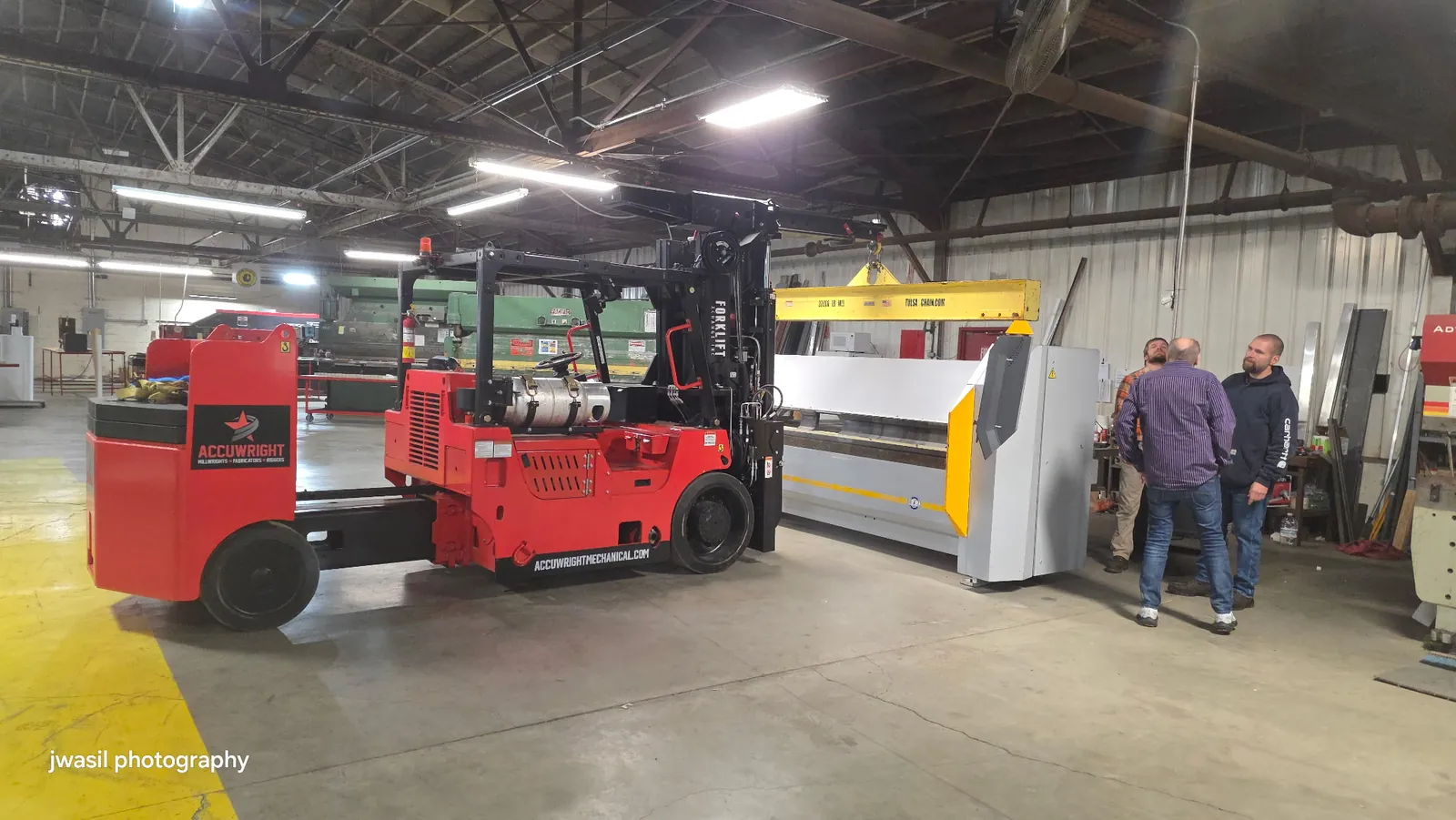
Pictured: a RIG-N-LIFT pick-and-carry crane under load, working inside the plant.
“What size crane do I need?” starts with two numbers.
The load is the first number. Working radius is the second — and the one that decides
whether the move needs a crane at all.
Suspended weight. The machine, hook block, lifting beam, slings, shackles, and every attachment below the hook.
Working radius. Measured horizontally from the crane centre of rotation to the load centreline at the controlling point of the pick.
Configuration. Boom length, counterweight, outriggers, work area, and reeving can materially change rated capacity.
Chart-backed class. Use the result to start planning — not to operate. The assigned crane and stamped chart govern the actual lift.
Enter the total suspended weight, not just the machine shipping weight.
Pick-and-carry crane or mobile crane for machinery moving?
Most machinery picks happen inside a building. That is where our cranes are built to work.
Industrial buyers search for a crane before they know a pick-and-carry crane exists:
a crane that drives through the door, works under low headroom, picks the machine,
carries it through the plant and sets it on its foundation. One machine, one crew,
one move. The mobile crane belongs to the pick with more reach or height than our
cranes have — over a roof, over a wall, or out at a long radius.
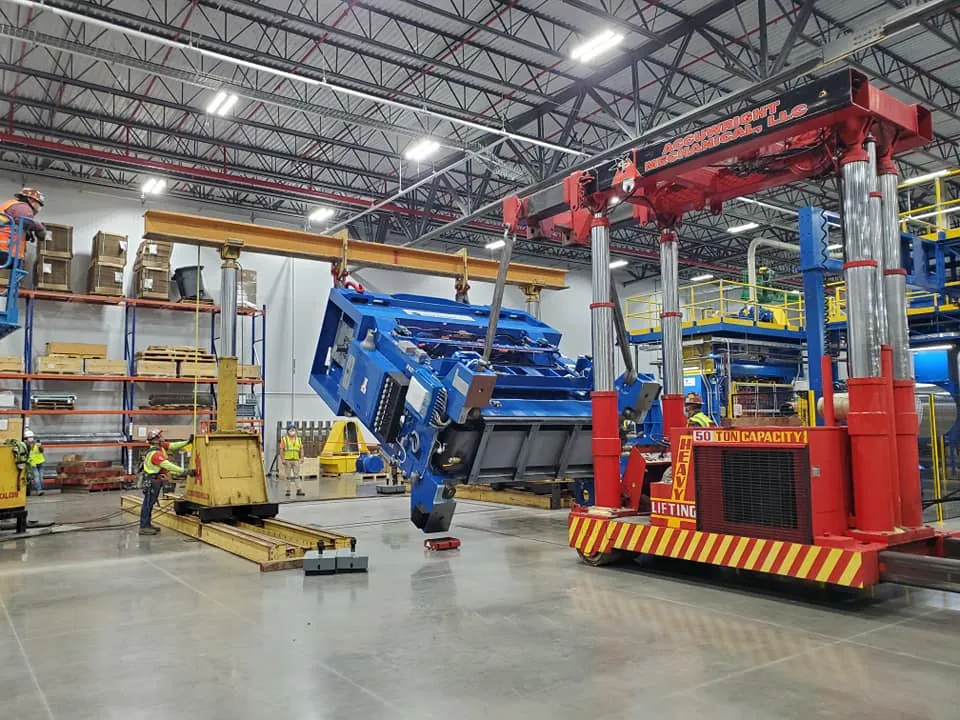
An Accuwright TriLifter gantry crane lifting a machine inside the plant — under a
roof no mobile crane gets beneath.
Accuwright pick-and-carry crane
Inside, low headroom, one machine
The first look for almost every plant move — unloading, doorways, aisles, low clearance and the final set. The machine that picks it is the machine that sets it.
Drives through the door and works under low headroom
Picks, carries and sets — no handoff between machines
No outriggers, no yard closed, no second vendor
Single-lift pick-and-carry to 118,000 lb
Mobile or crawler crane
Reach and height
The right path when the pick has to clear a roof, a wall, a pit or a process line, or the radius is longer than a pick-and-carry boom reaches.
Longer working radius or greater height
Outside setup with an inside destination
We plan the lift and bring the crane in — one contract
The honest version
You hear it up front
If a pick needs more reach or height than our cranes have, you hear it before you spend a dollar — and the plan covers the mobile crane, the handoff to our crane inside, and the final set.
One plan from the truck to the final set
NCCCO certified operators on the crane
Rigging gear arrives with the crew
Crane capacity by radius
A tonnage label is not a capacity answer.
A “100-ton crane” does not lift 100 tons everywhere. Capacity changes with radius, boom,
counterweight, outrigger position, work area, reeving, and the actual machine chart.
That is why the selector leads with radius. When a pick does need a mobile crane, this
is how it gets sized.
Representative planning data only — not a lift plan.
Class
Representative model
25 ft radius
60 ft radius
100 ft radius
100T
Link-Belt HTC-86100
60,100 lb
14,600 lb
4,800 lb
200T
Liebherr LTM 1200-5.1
193,475 lb
79,000 lb
40,000 lb
300T
Liebherr LTM 1250/1
232,667 lb
101,750 lb
54,525 lb
400T
Liebherr LTM 1300
332,750 lb
123,000 lb
60,000 lb
500T
Liebherr LTM 1500-8.1
454,000 lb
190,000 lb
99,500 lb
Values show the chart-backed main-boom envelope represented in the tool. Our pick-and-carry
cranes are rated the same way — capacity falls as the boom goes out. 118,000 lb is a
single-lift pick-and-carry maximum, not a capacity at reach; every pick is planned against
the assigned machine’s chart, configuration and site conditions.
Two ways to use us.
The way you’d use any good rigging company.
Operated lift — your plan
Our lift and operator, directed by your crew
We send the operated pick-and-carry lift by itself, or add what the day needs. Your crew calls the moves; our operator runs the machine and keeps everyone working safely.
Operated lift only
Add riggers
Add skates
Add a service truck
Turnkey — our plan
From the truck to the final set
We plan the lift, the move and the installation and run it as one job under one contractor. When the job needs a mobile crane’s reach or height, we plan it into the move and keep our crew on the rigging.
Unloading and loading out
Moving, setting and installing
One plan, one crew, one contract
A rigging company, not a crane company.
Accuwright is an industrial machinery moving, rigging, millwright, and turnkey project
contractor. For over 25 years our crews have unloaded, moved, set and installed machinery,
relocated plants, and made rooftop picks and structural sets. We work inside running plants,
under low headroom, with our own operated pick-and-carry lifts and our own riggers.
EMR 0.72NCCI interstate rating
OSHA 300 logs clean2022, 2023, 2024, 2025 — zero recordables
Never missed a startup in 25 yearsThe line comes back up on schedule
Same-day pricingA number back the same day, not in three to five business days
Trusted by ENGEL, Masonite, Purina, Owens Corning, Duracell and Victaulic,
among others.
Give the planner the move — not just the machine weight.
A useful crane conversation starts with the complete pick and placement path. These six
inputs tell us the same day whether the move needs a crane at all — and if it does,
exactly where the mobile crane hands the machine to our crew.
Total suspended load
Machine plus rigging, beams, hook block, attachments, fluids, tooling, and loose components.
Pick and set geometry
Where the load begins, where it lands, estimated radius, lift height, and required orientation.
Access and headroom
Door sizes, ceiling and mezzanine heights, rooflines, pits, pipe racks, utilities, process equipment, power lines, and traffic.
Site conditions
Setup area if a mobile crane is needed, slab or soil information, underground concerns, slope, weather, and exclusion zones.
Machine details
Dimensions, centre of gravity, approved lift points, OEM instructions, sensitivity, and final alignment needs.
Project sequence
Truck position, unloading plan, building entry, any crane handoff, final set, and production schedule.
Machines moved, set and installed.
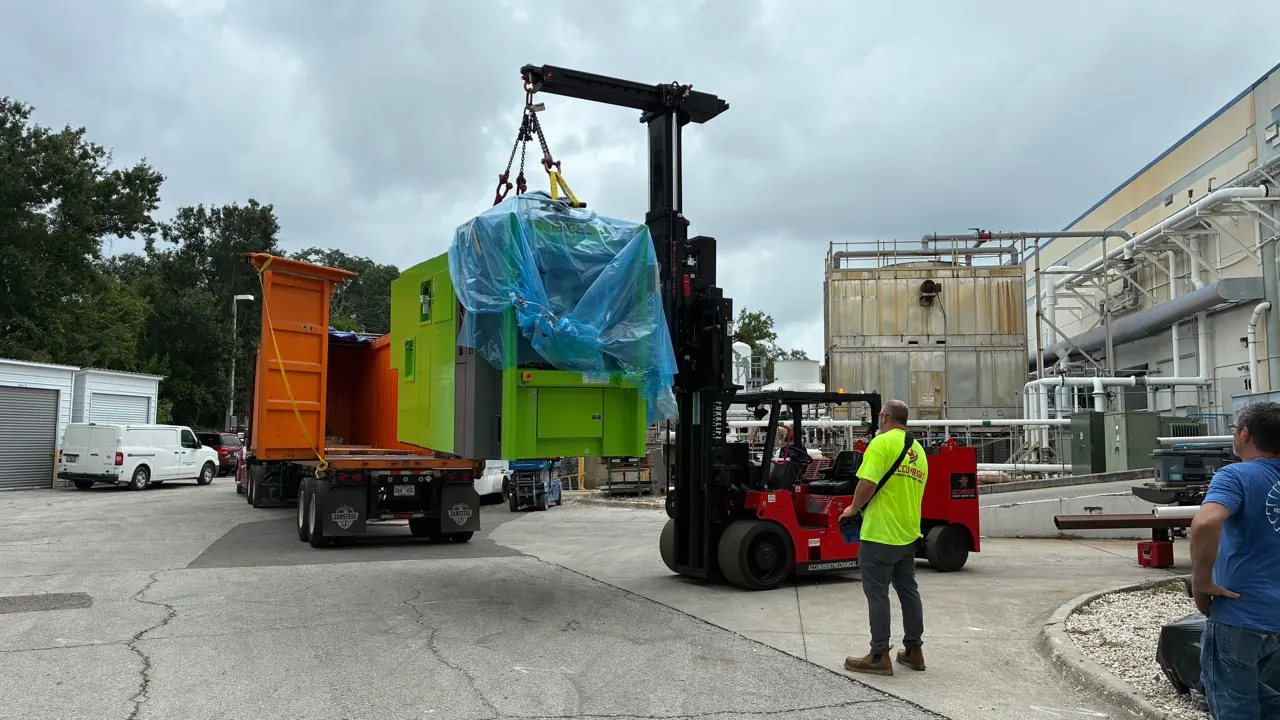
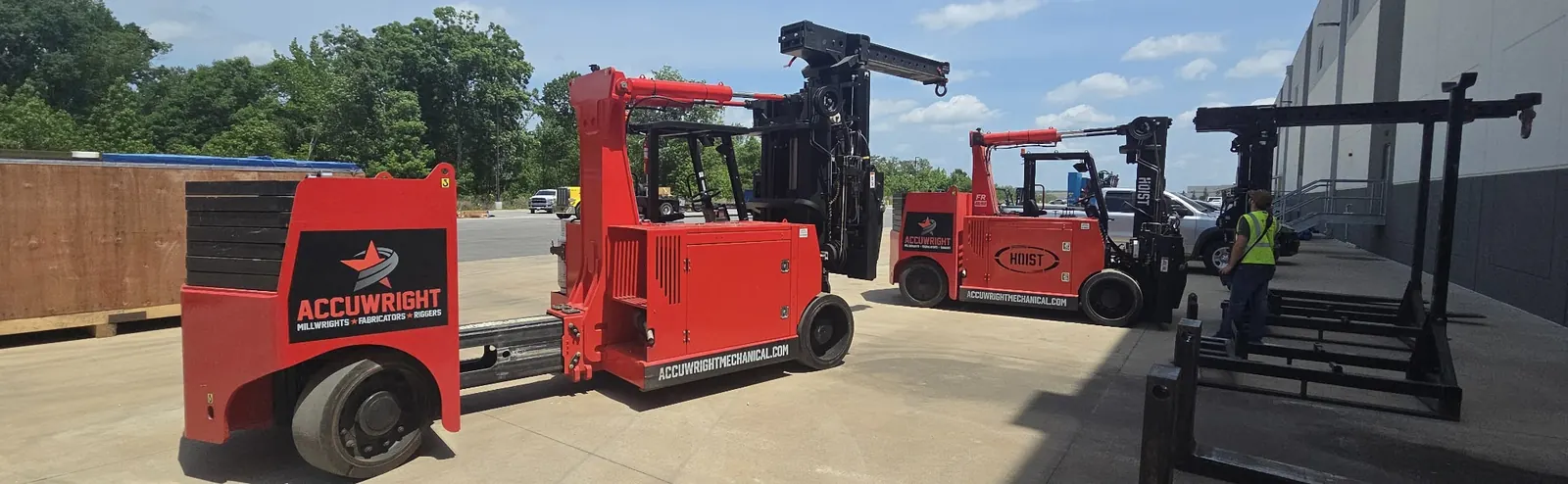
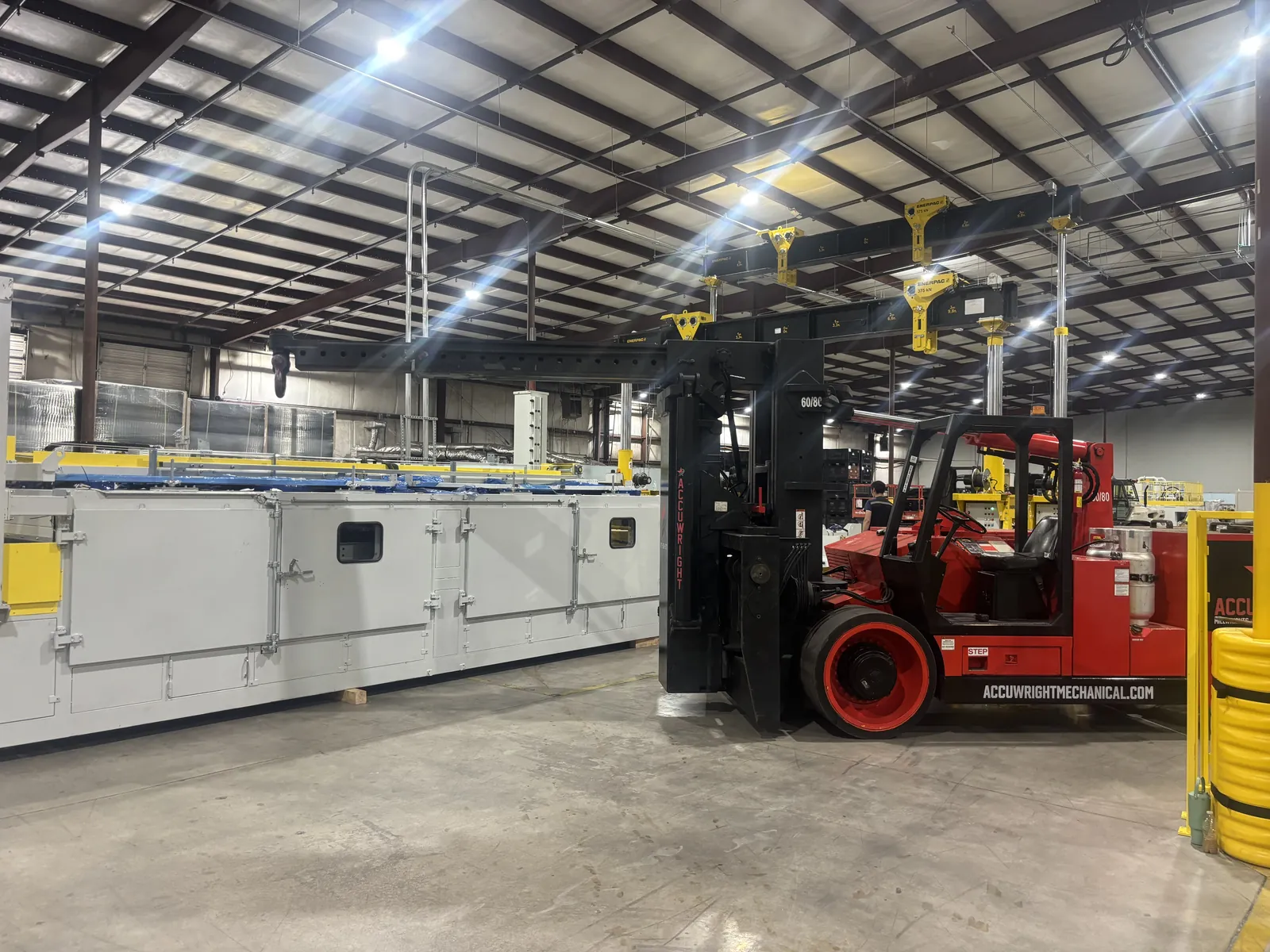
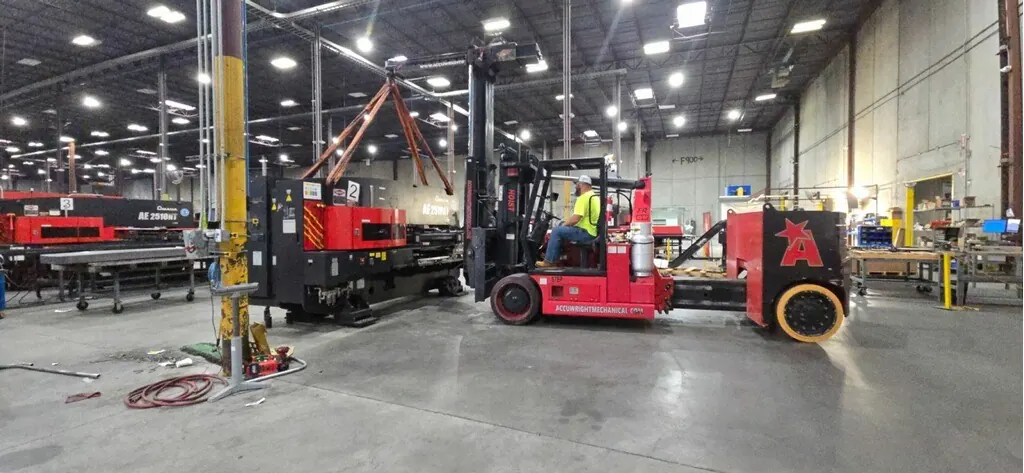
On the boom at the trailer — unloading is the first pick of the same move.Two of our pick-and-carry cranes staged for a job — the boom is the crane.A machine on the spreader beam — rated rigging gear, arriving with the crew.Gantry and pick-and-carry on the same line — both disciplines under one roof.Setting an Amada machine on its final position — the last inch of the same move.
Send us the job. A person contacts you the same day.
One machine or a whole production line — weight, access and the date you need it running
are enough to start. Tell us whether you want an operated lift to work your plan or the
whole job turnkey — we come back the same day with what it takes.
Same-day pricing. Give us the details and you get a number back the
same day, not in three to five business days.
Rather talk it through? 877-898-4377 — ask for the
planning team.
Crane sizing for machinery moves, explained.
What size crane do I need for an industrial machinery lift?
Crane size depends on the total suspended load, working radius, boom length, lift height, setup configuration, ground conditions, and obstructions — not weight alone. Enter the lifted weight and estimated radius in the Crane Selector for an initial planning class, then have the pick verified against the assigned crane’s stamped load chart and a site-specific lift plan. For most plant moves, our pick-and-carry equipment makes the pick as part of the move — no separate crane company.
What is a pick-and-carry crane?
A crane that picks the load and travels with it. Ours are built for industrial plants: they come through the door, work under low headroom, and carry the machine from the truck to its final set. A mobile crane lifts from a fixed position with its outriggers set; a pick-and-carry crane moves the load through the building. Our boom-rated machines, our TriLifter and our gantry systems all work this way.
Can your cranes work inside a building?
Yes — that is what they are for. Inside a running plant, down aisles, under low ceilings and mezzanines, without closing a yard or setting outriggers. Send a photo of the door and the route and we will tell you the same day whether the pick fits.
When do you bring in a mobile crane?
When the pick needs more reach or height than our cranes have: over a roof or a wall, into a pit, across a process line, or out at a long radius. We plan the lift, bring the crane in, and run it as one step of the installation with our crew on the rigging and our pick-and-carry crane taking the handoff inside. You hear it up front, not on the day.
How much can a 100-ton crane actually lift?
A 100-ton class rating is not available at every radius. In the representative 100T chart used by the tool, rated capacity is about 60,100 pounds at a 25-foot radius and 14,600 pounds at a 60-foot radius. The exact crane, boom, counterweight, outrigger setup, work area, and chart always control.
Why does crane capacity decrease as working radius increases?
As the hook moves farther from the crane centreline, leverage on the crane increases. That reduces the allowable suspended load. This is why a crane tonnage label by itself cannot answer whether a pick fits — and why 118,000 lb is our single-lift pick-and-carry maximum, not a capacity at reach.
Can I get an operated lift to work my own plan?
Yes — that is a rigging company staple. We send the operated pick-and-carry lift by itself, or add riggers, skates and a service truck. Your crew directs the work, we follow your plan and keep everyone working safely. Or hand us the whole job and we run it turnkey.
What information is needed to plan a crane pick?
Start with the machine weight, rigging weight, dimensions, centre of gravity, pick and set locations, estimated working radius, lift height, door and ceiling heights, access route, overhead and underground hazards, ground or slab information, and required schedule. Field verification is still required.
Is the Crane Selector an engineered lift plan?
No. It is a planning and estimating tool only. It does not authorise a pick or replace the actual crane load chart, qualified operator, qualified rigger, site review, ground assessment, rigging plan, or engineered lift plan.