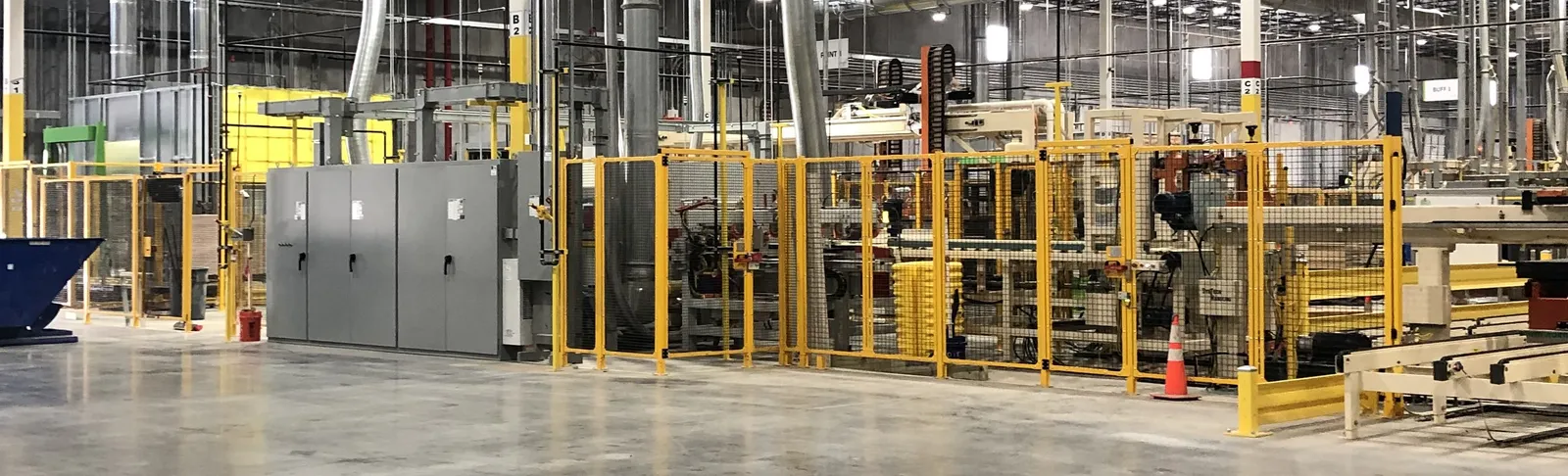
Industrial electrical
The machine runs when the electrical is done.
Accuwright is the industrial electrical contractor that follows the equipment: machine power, controls, disconnects, panelboards and cable management — self-performed by electricians on Accuwright’s own payroll, coordinated with the installation sequence instead of scheduled around it. The install isn’t finished until the machine turns on.
Tell us about the job Call 877-898-4377
Same-day pricing. Give us the details and you get a number back the same day, not in three to five business days.
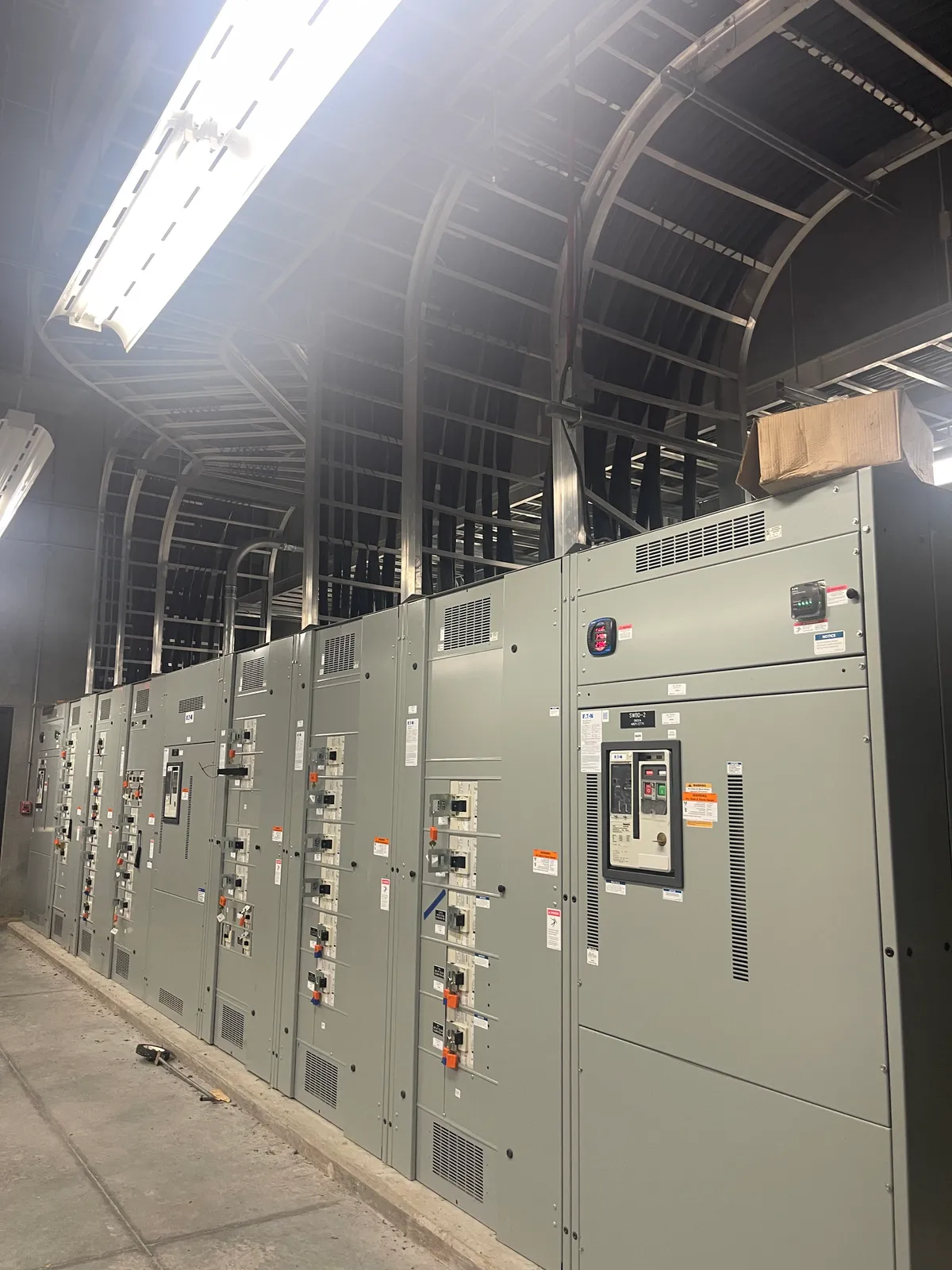
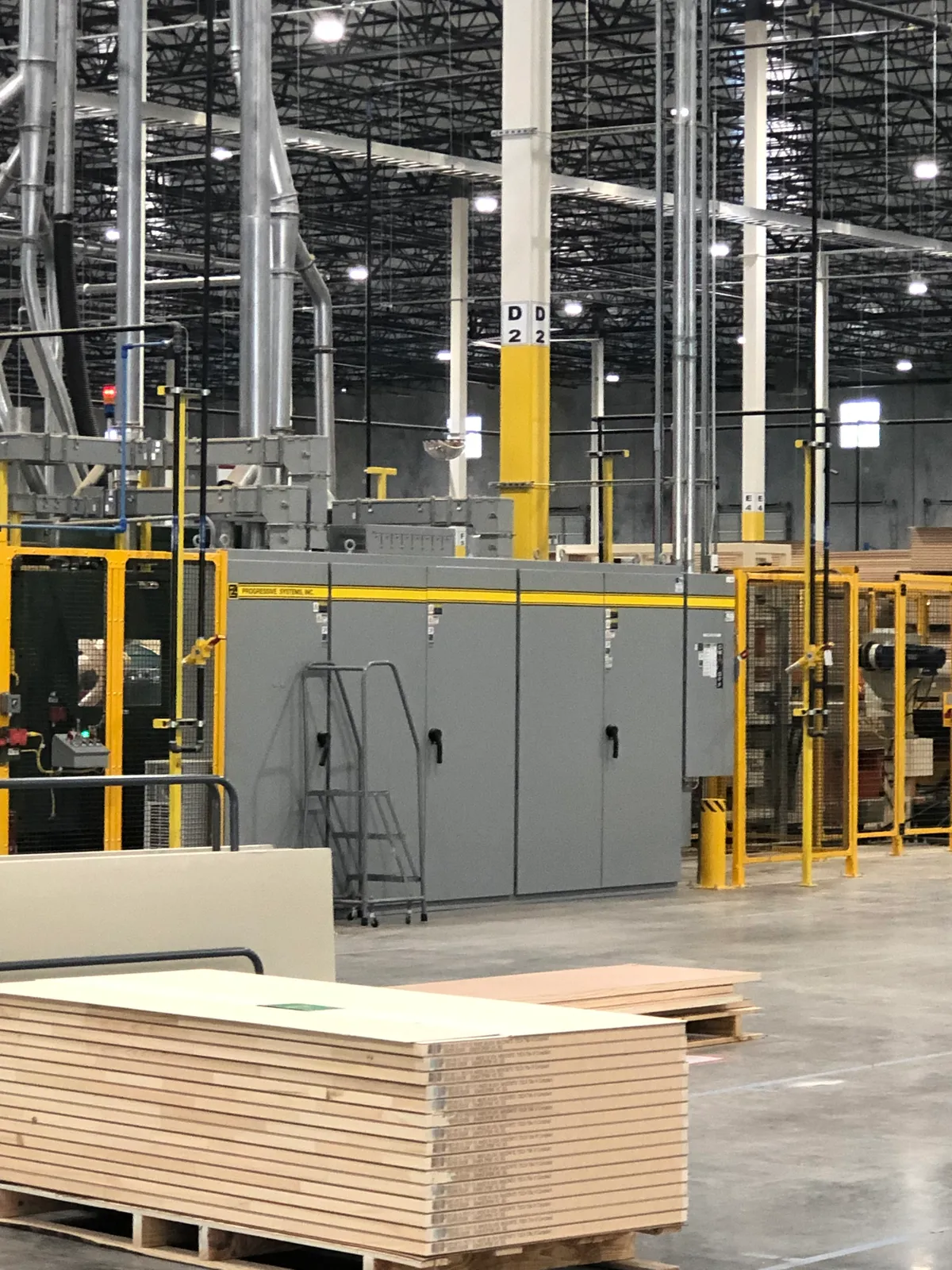
Pictured: the finished state — a line powered, controlled and ready to make parts.
Industrial electrical work that follows the machine.
General electrical contractors wire buildings. An industrial electrical contractor follows the equipment — and the work starts before the machine arrives and doesn’t end until it makes parts.
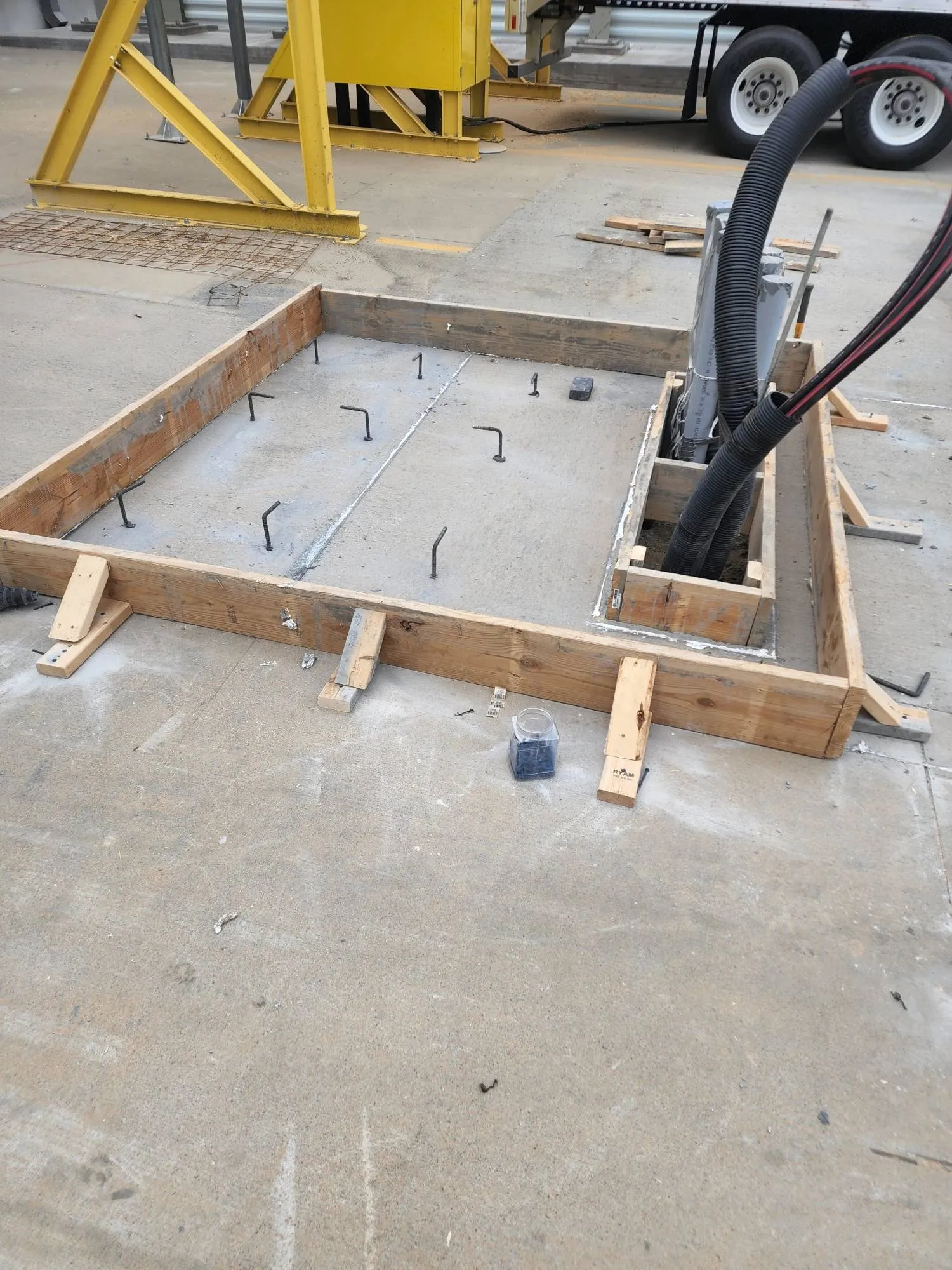
- Power before the machine lands. Foundation conduit stubbed into the pour, electrical service and supply runs sized to the equipment schedule, panelboards, feeders and distribution set — so the machine arrives to a floor that’s ready, not to a change order. Power planning belongs at the start of the project, and we’ll tell you exactly what to have ready.
- Equipment power & connections. Machine power, disconnects and terminations made to the OEM’s requirements — voltage, rotation and protection checked before the startup tech ever touches the panel — by the same company that set and aligned the machine.
- Controls, PLC & data. Control panels built and wired in-house, PLC and drive work on production equipment, control wiring landed and labeled to the schematic — plus industrial data and network cabling coordinated with the power, so the machine’s brain, its body and its network all arrive on the same schedule.
- Relocation electrical. When a line moves, the electrical moves with it: documented disconnects, drive and control cabinets de-wired and re-wired by the same crew, and the machine back on power at the new address without archaeology.
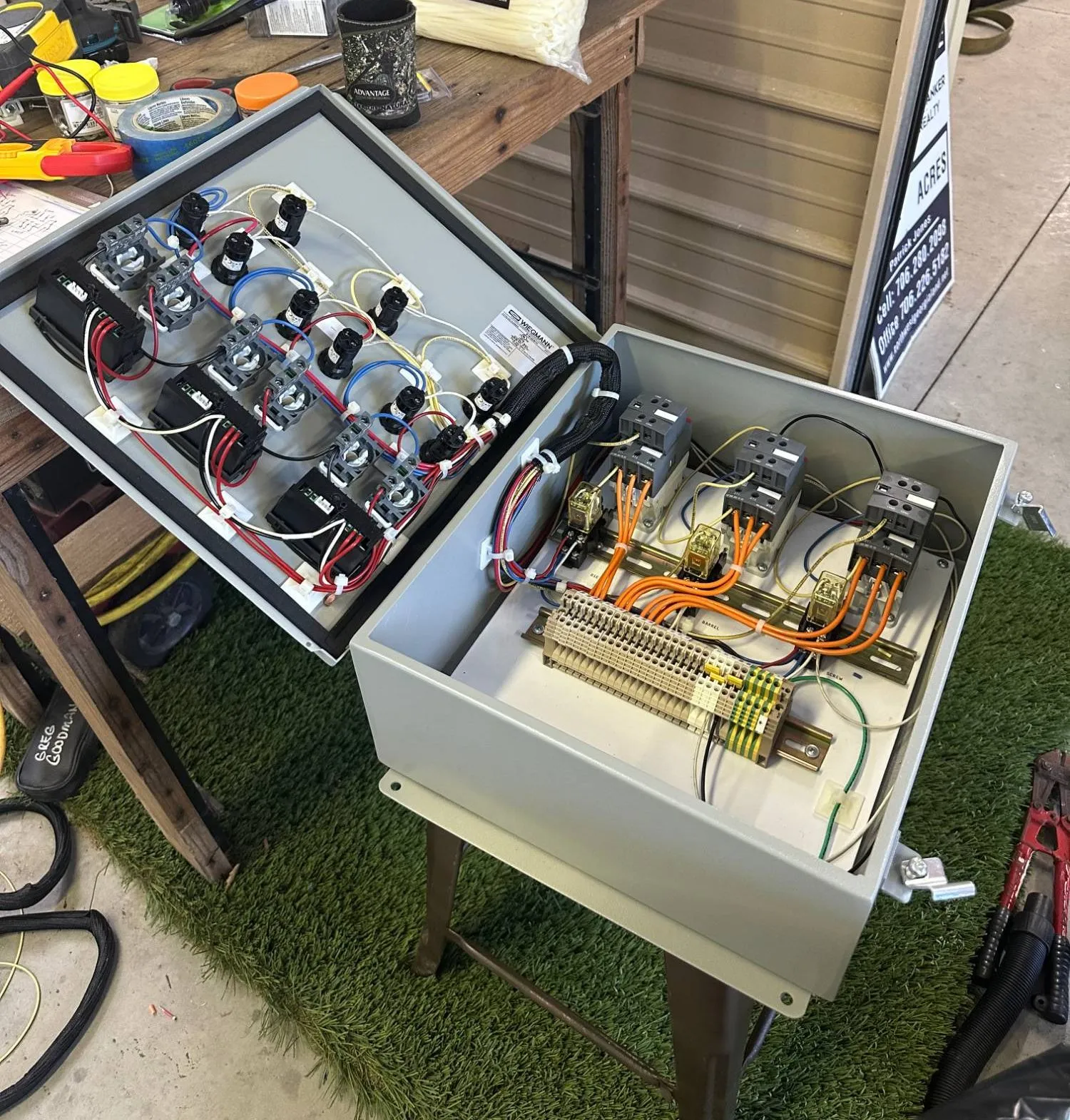
Control panels built in our own shop.
Panel building is bench work, and the bench matters. Accuwright control panels are built and wired in-house — contactors, DIN rail, terminal blocks, dressed and labeled wiring — then tested before they ever reach your floor. Building in the shop instead of in your aisle means fewer hours in your plant, a cleaner result, and a panel that matches its schematic when someone opens it in five years.
The same controls crew handles PLC and drive work on production equipment, and controls demolition and rewiring when a line relocates — so the wiring that comes out documented goes back in correct.
- Control panel building & wiring
- PLC & drive work on production equipment
- Equipment power & disconnects
- Panelboards, feeders & distribution
- Industrial data & network cabling
- Relocation de-wire & re-wire
Representative, not exhaustive — if it powers production, ask.
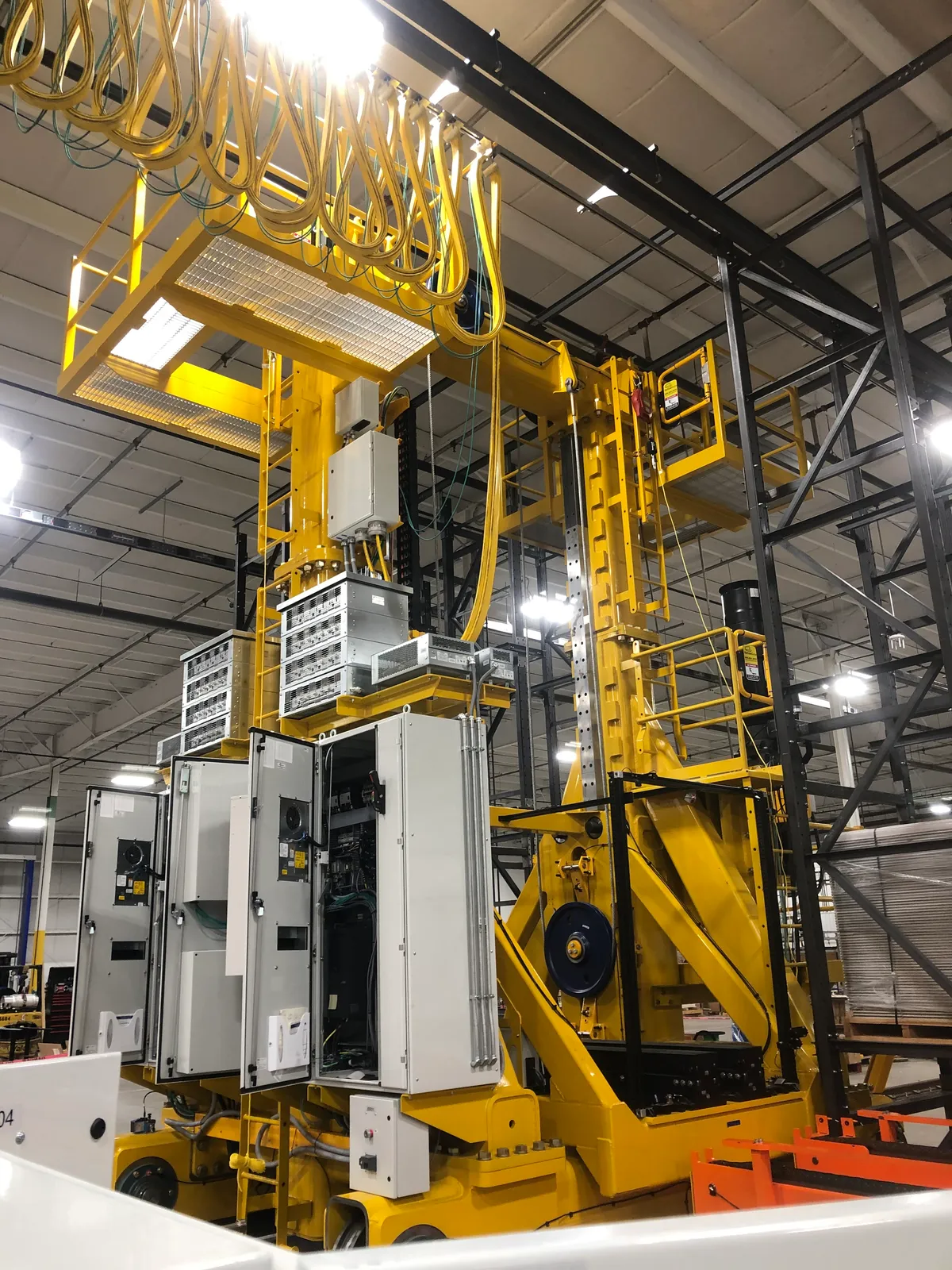
Controls and drives on the machine itself.
The panel is half the job — the other half lives on the equipment. Drive enclosures wired and landed, festooned cable runs dressed so they survive the machine’s own motion, sensors and safety circuits terminated to the schematic, and every conductor labeled so the next person to open the door isn’t guessing.
Because the electricians share a payroll with the millwrights who set the machine, the controls work rides the installation sequence — the machine’s brain and its body arrive on the same schedule, and the startup happens once.
- Drive enclosures wired & landed
- Festoon & moving-cable management
- Sensor & safety-circuit termination
- Labeled to the schematic, documented at handover
Part of one accountable install.
Industrial electrical rarely stands alone here — it arrives with the millwright work, the process piping and utilities, and the machinery moving & rigging that brought the equipment in. Millwrights, riggers, welders, pipefitters and electricians are on Accuwright’s own payroll, and our crews self-perform the core work — which is why Accuwright has never missed a startup in 25 years, across more than 900 industrial customers in over 40 US states and internationally. The coordination gap that wrecks schedules doesn’t exist when there’s nothing to coordinate.
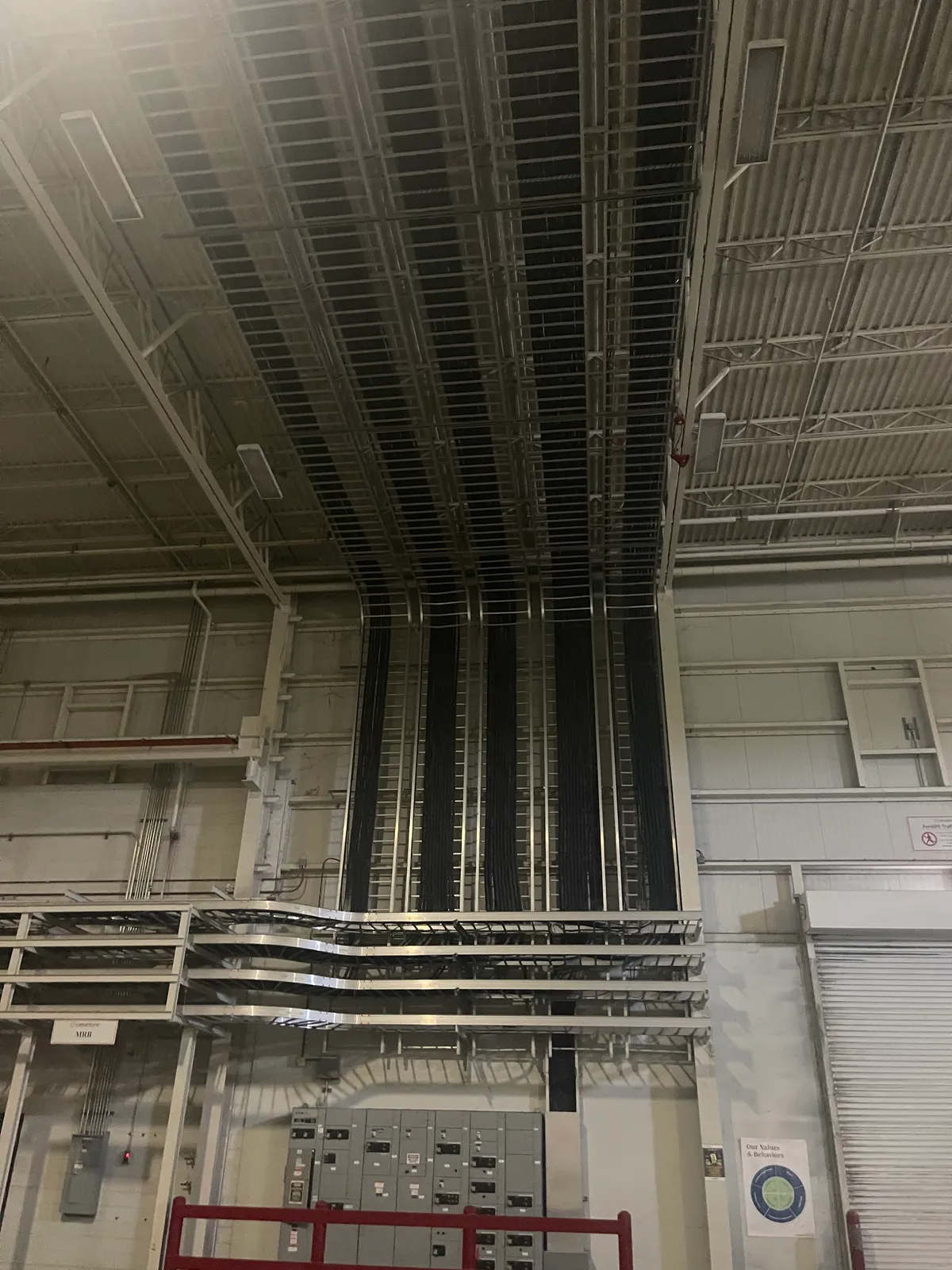
The work in pictures.
Tell us about the job.
The equipment, the scope, the timeline — one-lines if you have them, photos if you don’t. Same-day pricing: a number back the same day, not in three to five business days.
Rather talk it through? 877-898-4377 — ask for the planning team.
Industrial electrical, answered.
Are you an industrial electrical contractor or a general electrical contractor?
Industrial — and that’s the point. Accuwright’s electrical work follows industrial equipment: machine power, controls, disconnects and the distribution that feeds them, coordinated with the machine installation itself. If the scope is lighting a warehouse, a general contractor is the right call; if the scope is making a production line run, this is.
Do you build control panels?
Yes — panels are built and wired on our own bench: contactors, DIN rail, terminal blocks, dressed and labeled wiring, tested before they ship to your floor. Building in the shop instead of in your aisle means fewer hours in your plant and a cleaner result.
Do you do PLC and drive work?
Yes — PLC and drive work on production equipment is part of the controls scope: panels built in-house, control wiring landed to the schematic, and controls demolition and rewiring when a line relocates. We plan and execute the controls work around the machine installation, on one schedule.
Can you handle the electrical side of a machine move?
Yes — it’s half of what makes a relocation come back up on schedule: documented disconnects, drive and control cabinets de-wired and re-wired by the same crew, and power back on the machine at the new address without reverse-engineering someone else’s wiring.
Do you run data and network cabling?
Yes — industrial data and network cabling in production environments, coordinated with the power: drops, tray and cable management run clean, labeled and documented. The machine that can’t talk to the plant isn’t started up, so the cabling rides the same schedule as everything else.
Why does it matter that the electricians share your payroll?
Because the alternative is coordination: a machine installer waiting on an industrial electrician who answers to a different schedule. Millwrights, riggers, welders, pipefitters and electricians on one payroll means one schedule, one point of accountability, and a startup date that has held for 25 years.
Can power be ready before the machine arrives?
That’s the professional way to do it: conduit stubbed into the foundation pour, electrical service and supply run, panelboards and feeders set — so installation day is about the machine, not the infrastructure. Power planning belongs at the start of the project, and we’ll tell you exactly what to have ready.
Where do you work?
Two shops — Greenville, Georgia and Fort Worth, Texas — working the Southern Industrial Corridor from South Carolina to Texas, with reach coast to coast, during business hours and planned around your production windows.