Machinery moving & rigging
Machinery moving. Rigging. Two words, one crew.
Half our customers call it machinery moving. The other half call it rigging. They are not quite the same thing — and after 25 years of doing both with crews on our own payroll, we are a fair referee. Here is what each term means, and why the answer to “which one do I need?” is usually a phone number, not a definition.
Tell us about the job Call 877-898-4377
Same-day pricing. Give us the details and you get a number back the same day, not in three to five business days.
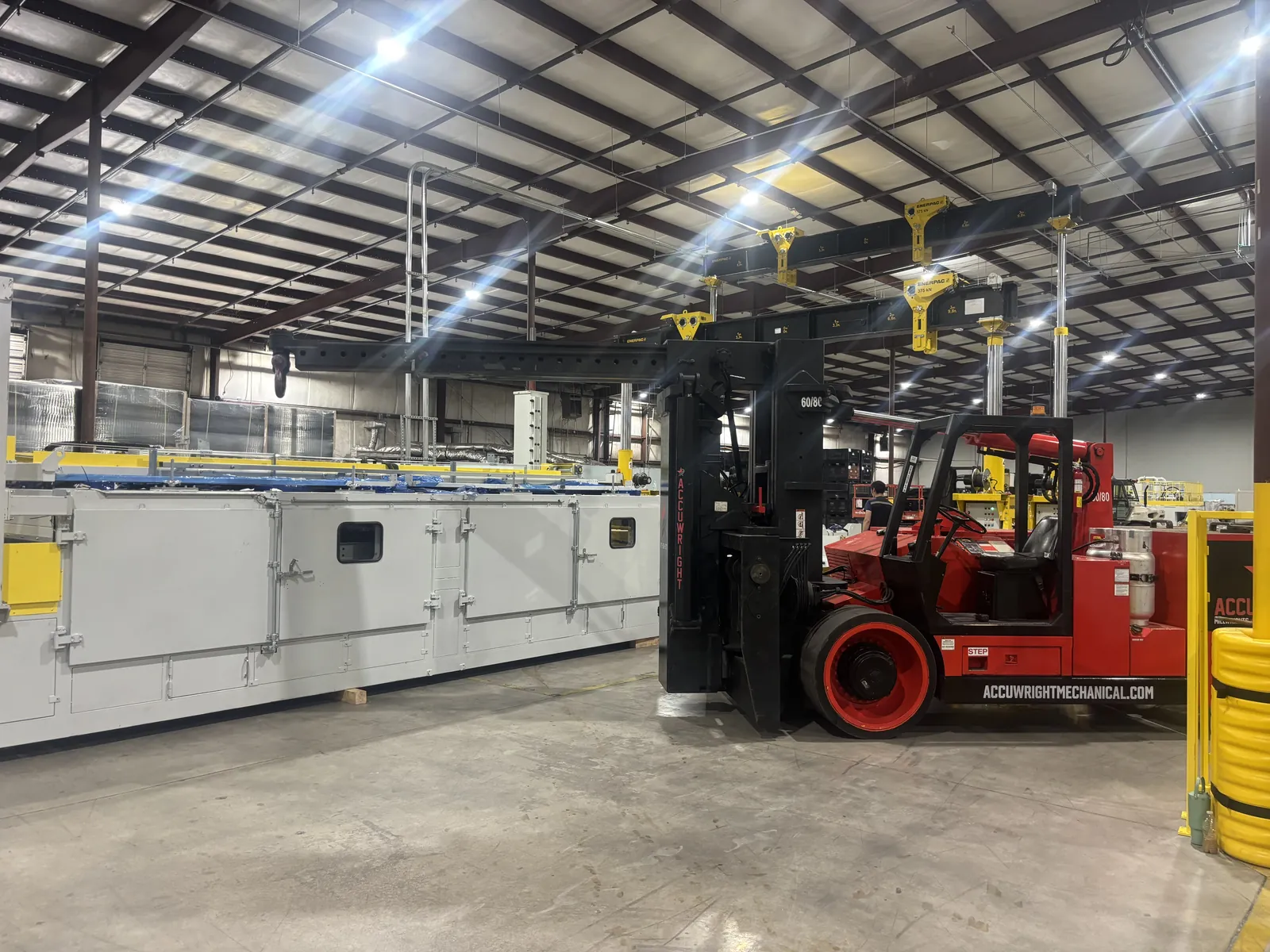
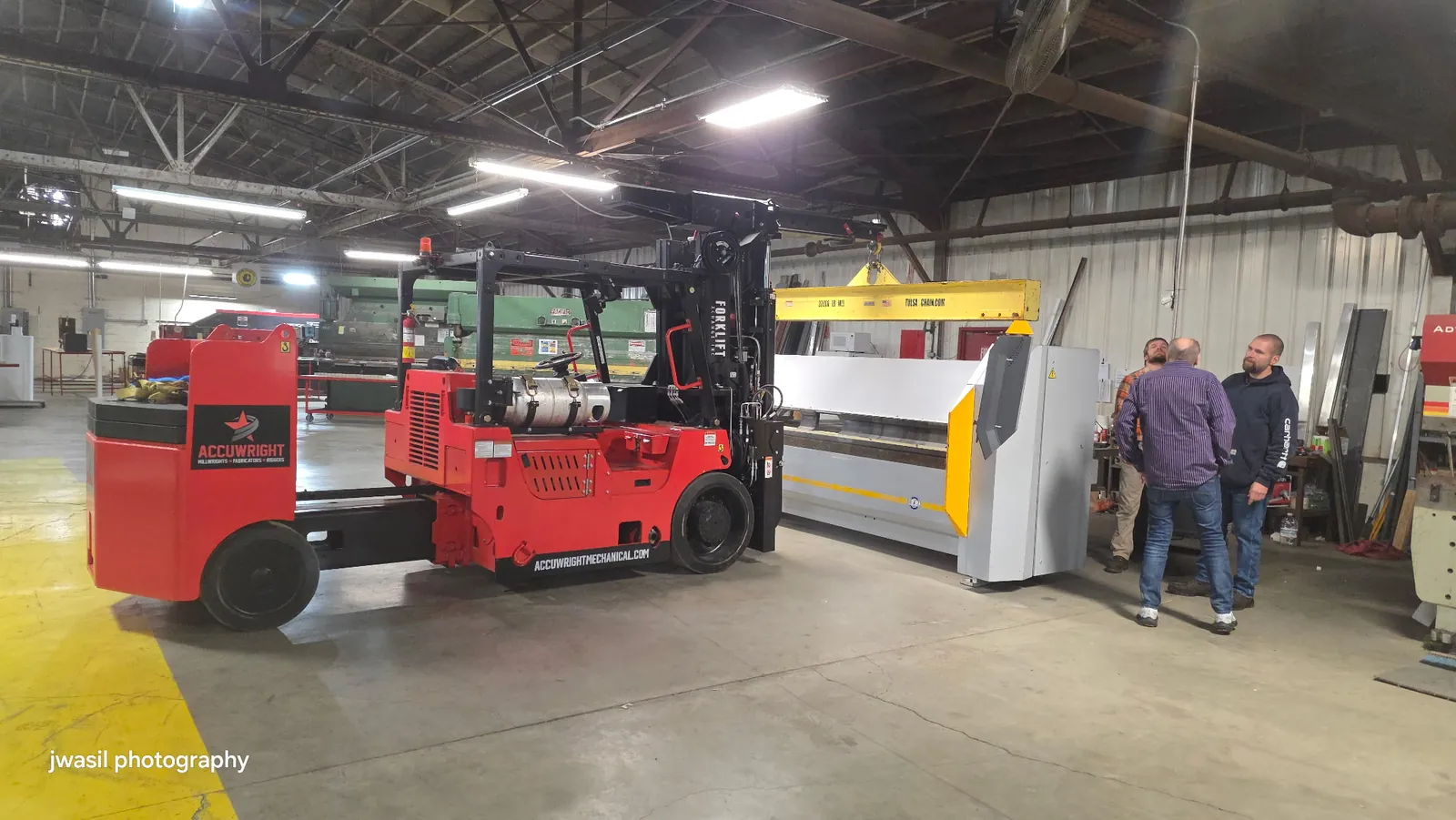
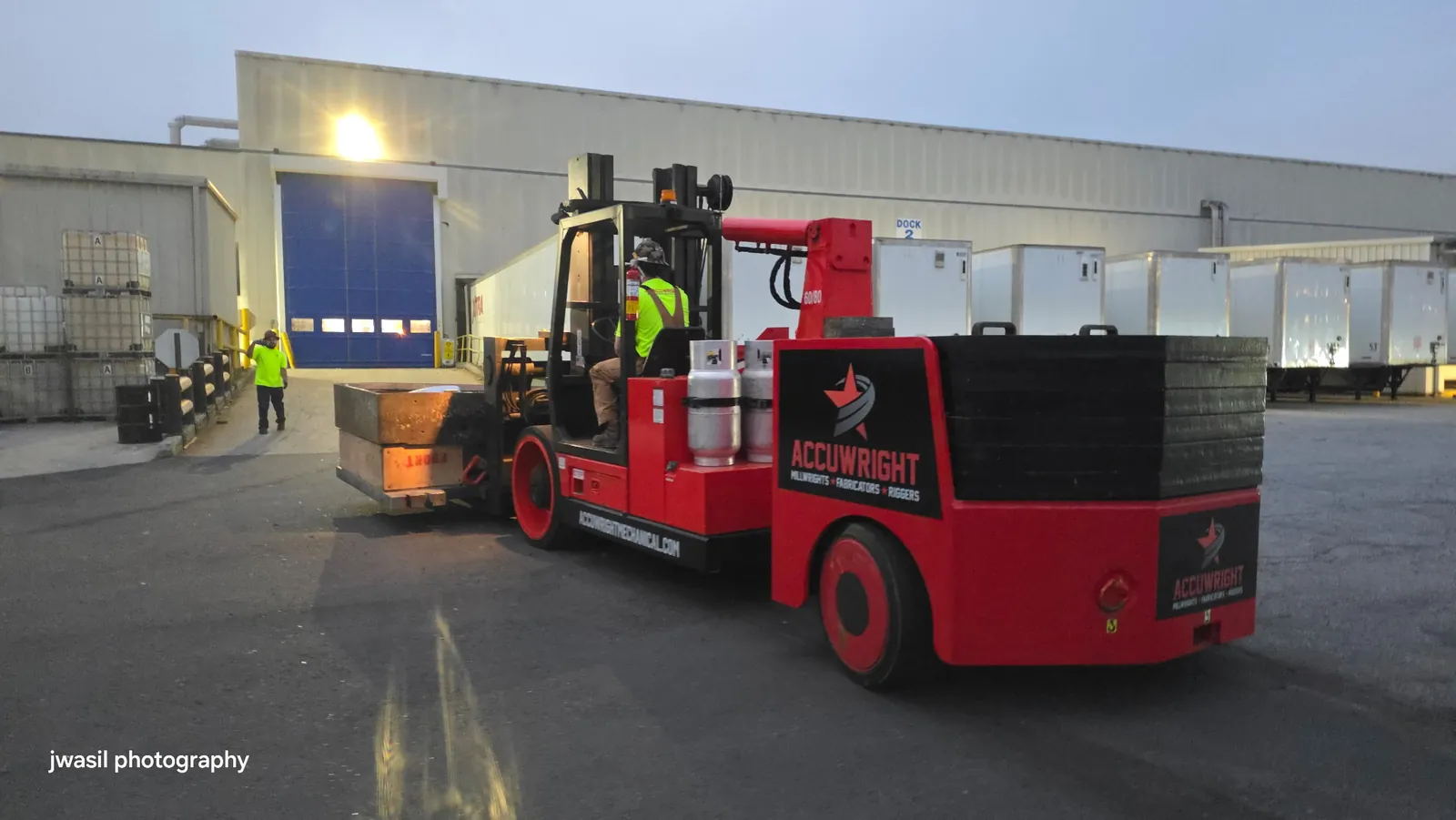
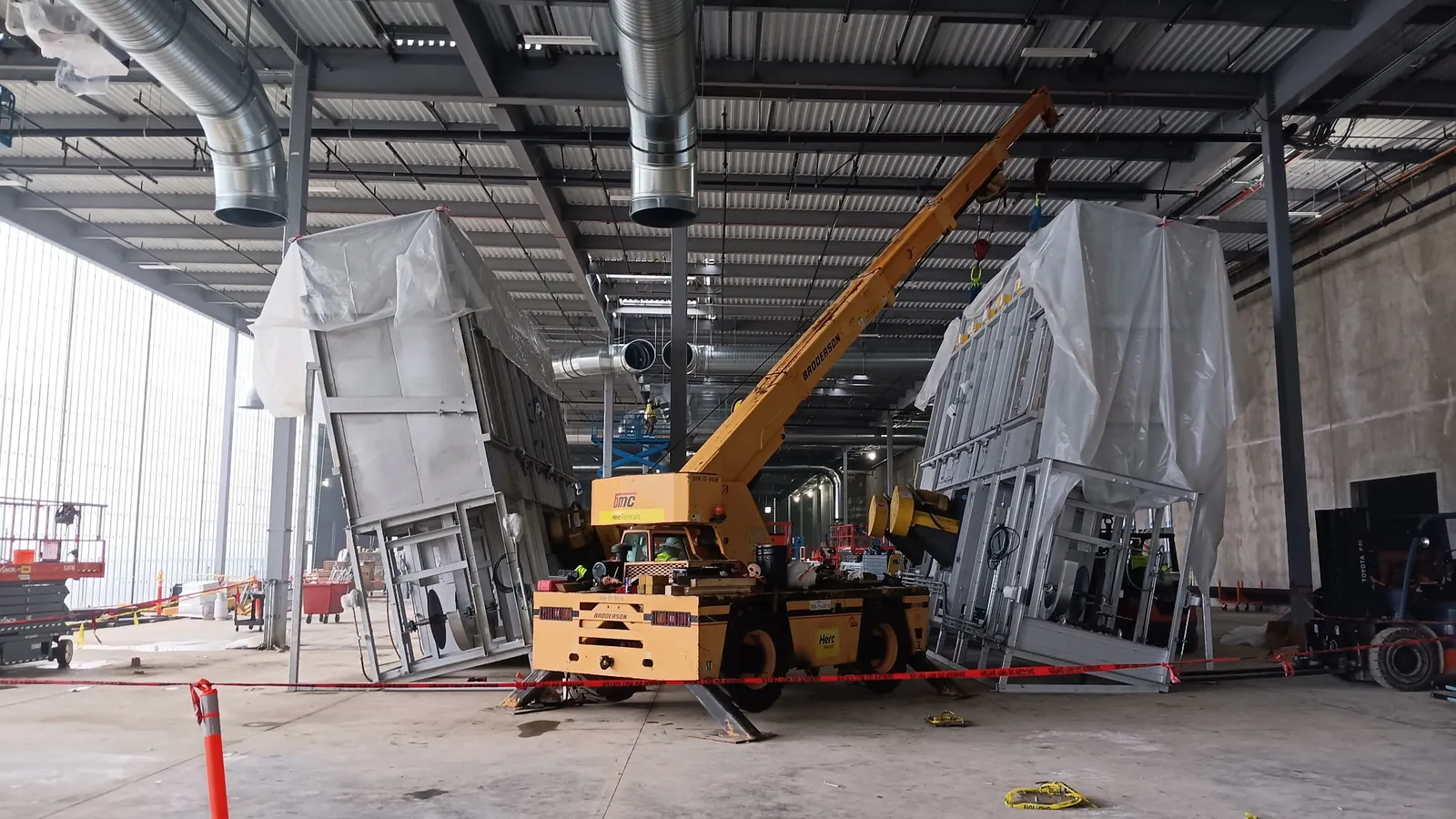
Pictured: both trades in one frame — a purpose-built machinery mover and a hydraulic gantry system, working the same line.
The two terms, defined.
Plant managers, OEMs and insurance adjusters use these words differently. The trades behind them are distinct — and both live here.
Machinery moving
- The whole errand: get a machine from where it sits to where it runs
- Pick it up, carry it, transport it, land it, set it, level it
- Purpose-built movers — pick-and-carry to 118,000 lb in a single lift
- Measured by the machine arriving ready for work, undamaged, on schedule
Rigging
- The lifting discipline inside that errand — and beyond it
- Weights, centers of gravity, pick points, slings, beams, gantries, jacks
- Engineered rigging systems for loads over 400,000 lb
- Measured by the lift plan surviving contact with reality — every time
The short version: rigging is how the load gets lifted; machinery moving is everything that has to happen so the machine runs at the other end. A machine move without rigging skill damages equipment. Rigging without millwright skill leaves a machine sitting pretty and useless. The trades belong together, which is why our riggers and machinery movers are the same crew.
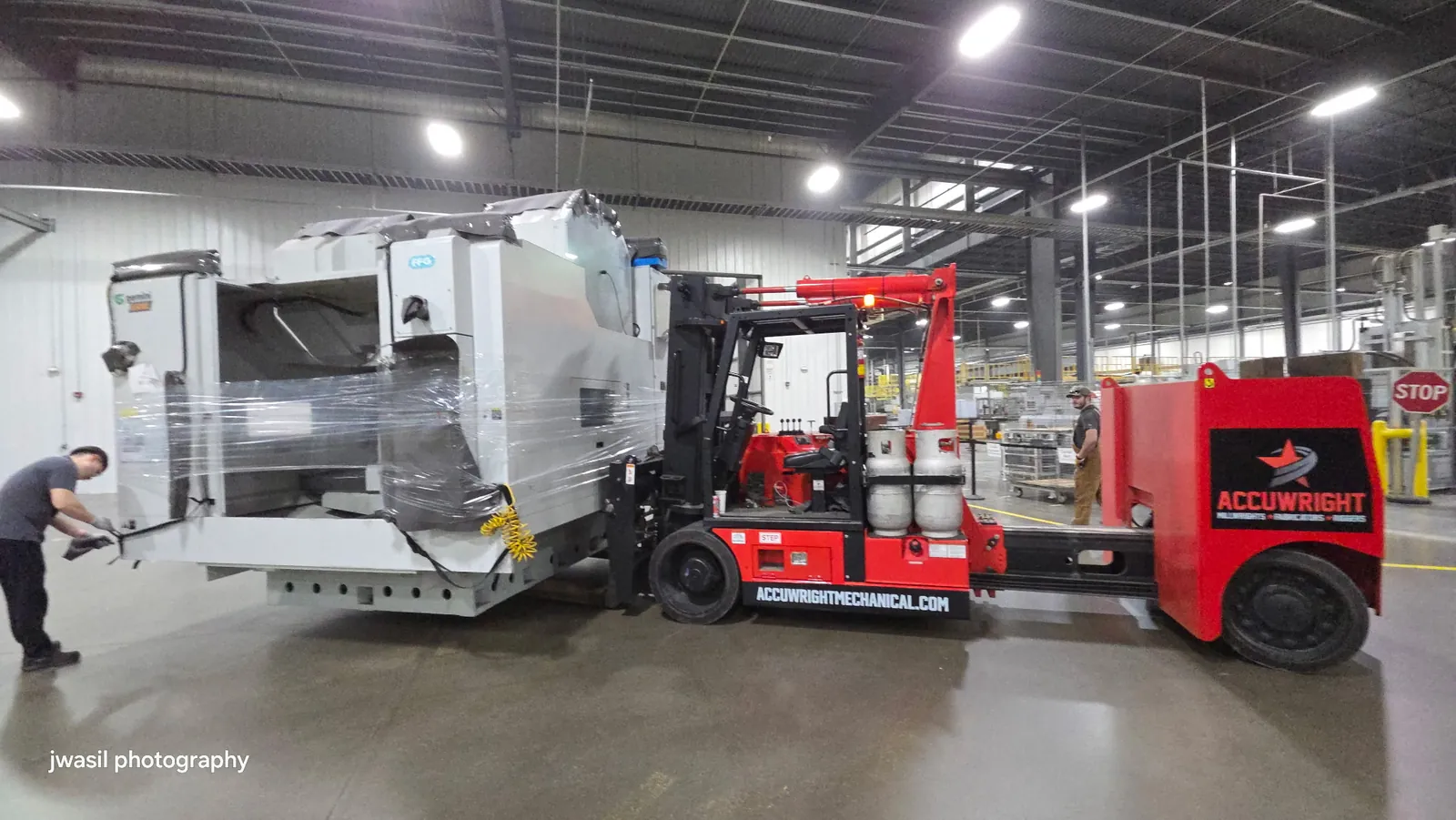
When people say “machinery moving,” they mean the errand.
A machine has to leave a truck, a floor or a plant, and arrive at another one ready to work. That is machinery moving: the survey, the route, the equipment sized to the load, the carry, the set, and the leveling at the end. It is the term OEMs and plant managers reach for when the object of the sentence is the machine.
If that is your job — a machining center changing plants, a press coming off a lowboy, a line reshuffling inside one building — heavy machinery moving is your page.
When people say “rigging,” they mean the discipline.
Rigging is the craft of connecting a load to a lifting force without guesswork: verified weights, centers of gravity, pick points, sling angles, spreader beams, hydraulic gantries, jacks and skates — planned by people certified to run them. It is the term engineers and insurance carriers reach for when the object of the sentence is the lift. It also covers work that is not a “move” at all: uprighting a vessel, setting equipment onto mezzanine steel, tilting a module into a pit.
If that is your job — an engineered lift, a tandem pick, a tight-headroom placement — industrial rigging is your page.
Where the line blurs — and why it doesn’t matter here.
Search “machinery movers,” “rigging company,” “millwright rigging” or “machine installation” and you are describing the same afternoon of our work.
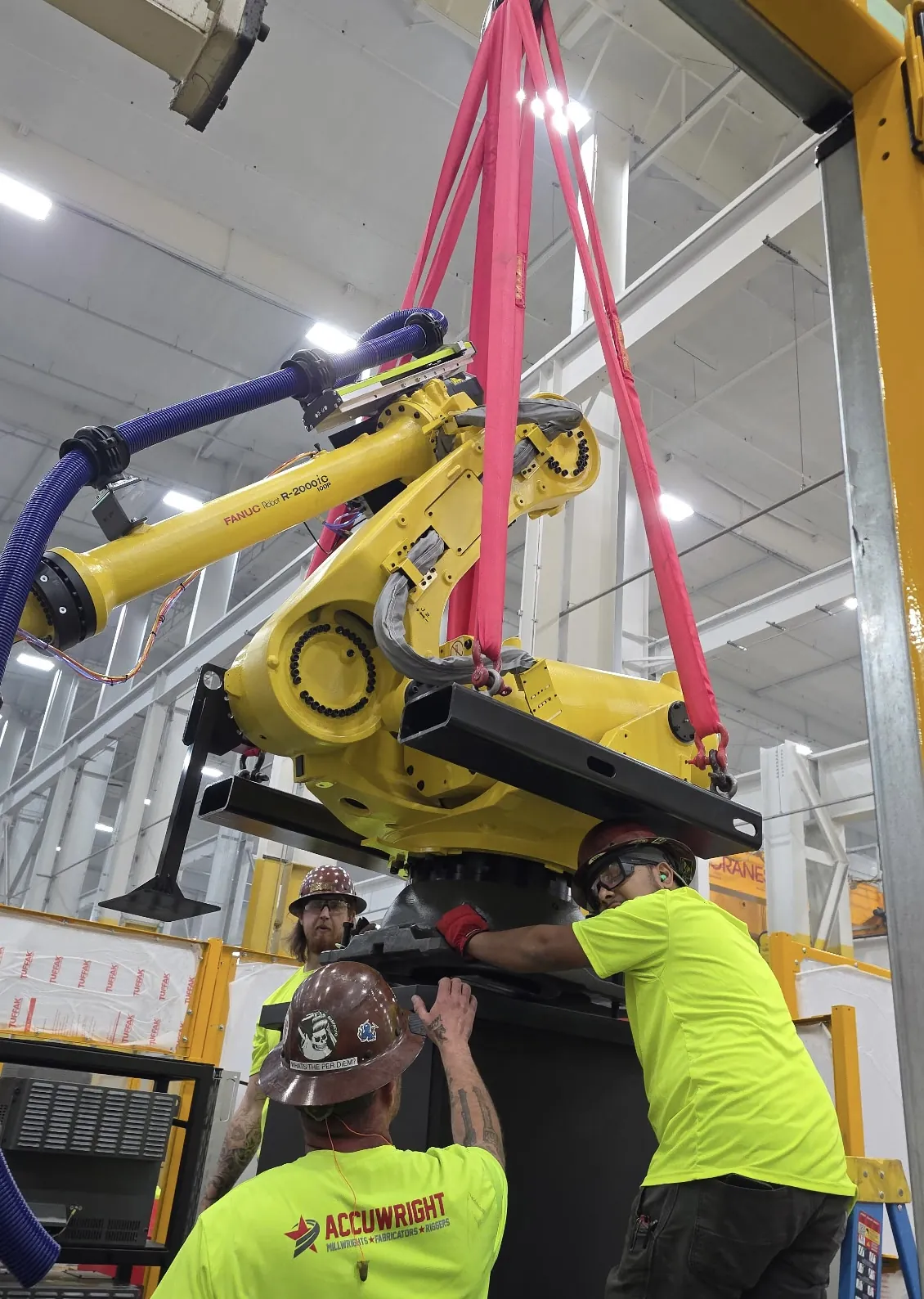
- You describe the job in your words. “Move this lathe.” “Rig in a press.” “Get this robot onto its stand.” However it arrives, it lands with someone who has done it.
- We survey and plan. Weight, dimensions, access, floor loading, headroom. The plan decides whether the day needs a pick-and-carry mover, a gantry system, or both.
- One crew executes. The riggers are the machinery movers are the millwrights — NCCCO certified operators, on our own payroll, self-performing the core work.
- The machine runs. Set, leveled, aligned and ready for reconnection — because the job was never really “move a machine.” It was “make the machine work over there.”
Whatever you call it and whatever it includes — Accuwright has done it for 25 years and never missed a startup doing it.
Both trades, on real floors.
Say it your way. Land in the right place.
Every version of this work has its own page, its own photos and its own answers — pick the one that sounds like your job, or skip straight to the form below.
Tell us about the job — in your words.
Weight, dimensions and access are what set the price — the more you can give us here, the closer the first number will be. Same-day pricing: a number back the same day, not in three to five business days.
"*" indicates required fields
Rather talk it through? 877-898-4377 — describe it however you like; the person answering has done it.
Machinery moving vs. rigging, settled.
Is machinery moving the same as rigging?
Not exactly. Rigging is the lifting discipline — calculating weights and centers of gravity, choosing gear and pick points, executing the lift. Machinery moving is the whole errand: rig it, carry it, transport it, set it, level it. Every machine move contains rigging; not all rigging is a machine move (uprighting a vessel or setting equipment onto steel is pure rigging). Many people use the words interchangeably, and in practice a good contractor carries both trades in the same crew.
Do I need a machinery mover or a rigging company?
Describe the job, not the trade. If a machine has to end up somewhere else and run, that is machinery moving with rigging inside it. If a load has to be lifted, tilted, uprighted or precisely placed, that is rigging. Either way you want one contractor holding both — otherwise the mover blames the rigger’s lift plan and the rigger blames the mover’s route, and you hold the schedule.
What is the difference between a rigger and a millwright?
A rigger moves and lifts the machine; a millwright makes it run — setting, anchoring, leveling, precision alignment and reconnection. On an Accuwright crew they are usually the same certified people, which is why our jobs do not have a handoff between “delivered” and “running.” Never missed a startup in 25 years.
Who moves CNC machines and machining centers?
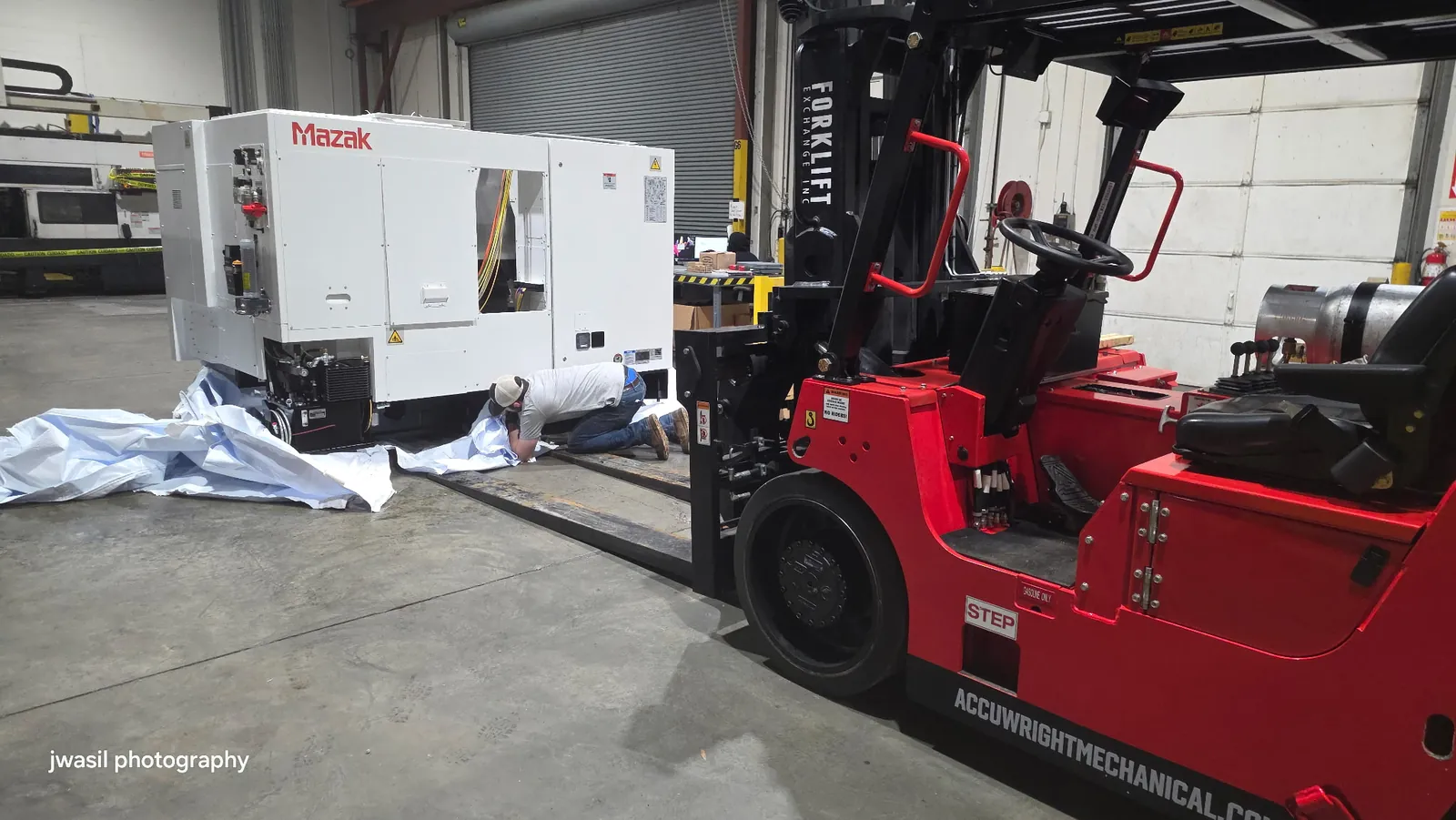
Machinery movers with the right equipment and OEM knowledge. CNC equipment is dense, top-heavy and unforgiving of shock loads — it moves on purpose-built machines, wrapped and protected, with lift points the OEM would approve. As a certified installer for equipment including Amada, Okamoto, MultiCam and Trumpf — among many others — we move machine tools with the same crews that install them.
How heavy can you go?
Single-lift pick-and-carry to 118,000 lb. Engineered rigging systems for loads over 400,000 lb. Two different tools for two different jobs — and quoting yours starts with its weight, not its label.
What does this work cost?
Weight, dimensions, access and distance set the number, plus whether the scope includes setting and leveling. Send those through the form and pricing is same-day. For a rough range with no contact details, the free Rigging Cost Estimator takes a few minutes.